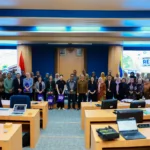
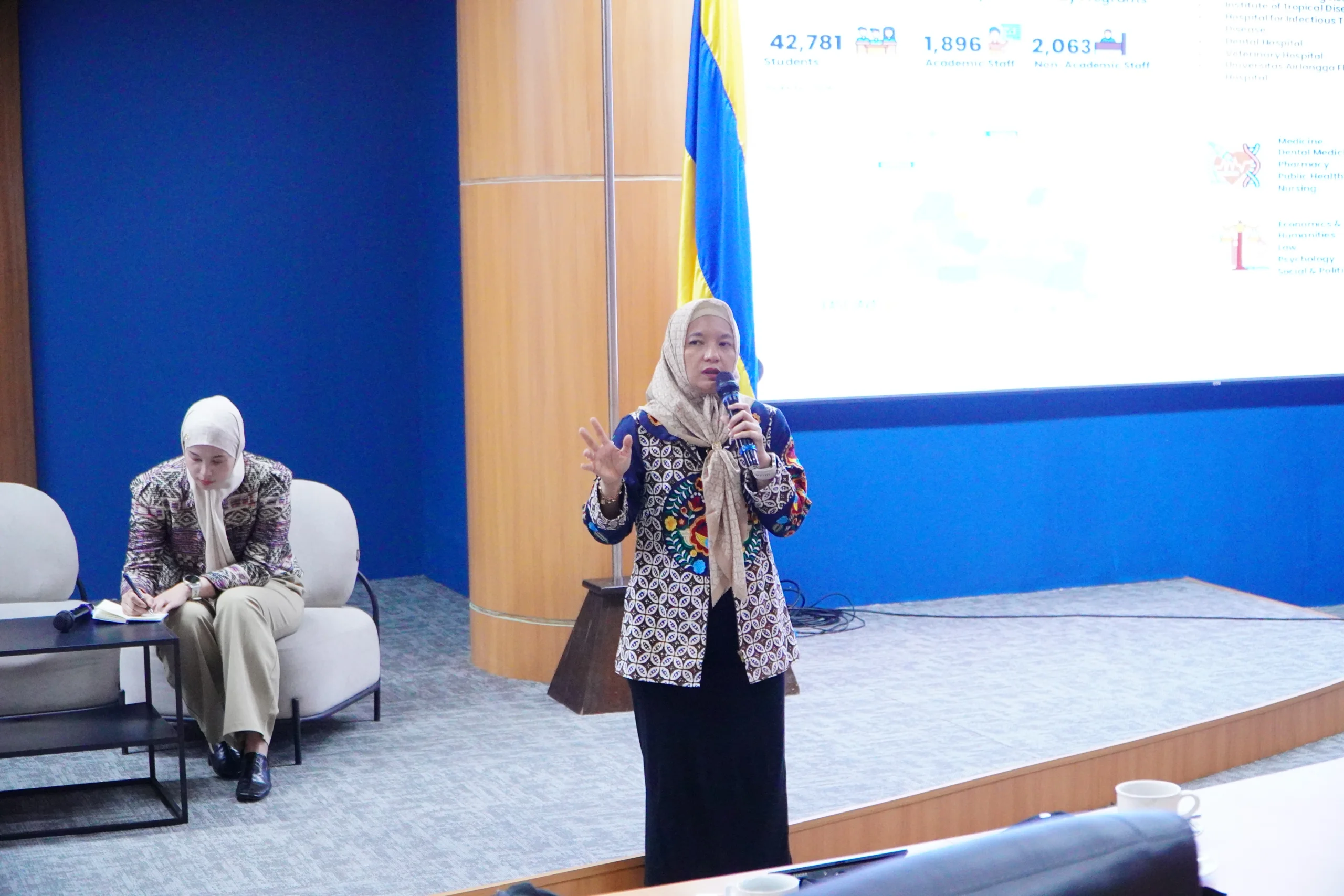
UNAIR NEWS – New paradigm in academics requires research outcomes to go beyond mere scientific publications and have a tangible impact on society. This was emphasized by the Head of the International Research and Research Center Strengthening Subdirectorate at the Directorate for Research and Innovation (DRI) of Universitas Airlangga (UNAIR), Dr Kurnia Dwi Artanti dr MSc, during the Impact-driven Research Workshop held at the Airlangga Convention Center on Monday, October 19, 2026.
This workshop organized by the Institute for Journal Development, Publications, and Intellectual Property Rights (LPJPHKI) Universitas Airlangga (UNAIR) and titled “Aligning Research and Publications with the National Health Policy Agenda,” was held to strengthen collaboration between academics. Dr Artanti emphasized that a structured research ecosystem is key to supporting national policy needs.
Switching from individual to group model
To ensure research sustainability, DRI UNAIR is shifting its research framework from an individual-based model to one centered on research groups and research centers. This strategic move is intended to minimize risks associated with the interruption of research projects should the principal investigator be unable to attend or retire.
“Research can no longer be conducted independently by a single person. Through research groups, responsibility for producing research outputs can be shared, ensuring the sustainability of the research,” Dr Artanti emphasized.
As a measure to enhance research effectiveness, UNAIR has streamlined approximately 500 research groups into 135 active research groups. These groups are divided into three main clusters: Health Sciences, Science and Engineering, and Social Sciences.
Facilitate interdisciplinary collaboration
In addition, a public health faculty lecturer explained that research groups focus on a single discipline at the faculty level. Meanwhile, research centers must be interdisciplinary in nature, bringing together at least three research groups from different faculties.
“Research centers serve as the foundation for the establishment of Centers of Excellence in Science and Technology at Higher Education Institutions. Their formation must involve interdisciplinary collaboration to deliver comprehensive solutions,” she said.
Dr Artanti explained that research support at DRI UNAIR extends beyond the academic realm, providing ongoing guidance until the research is ready for commercialization. “Our business process at DRI involves guiding research from Technology Readiness Level one through six. Once the research is fully developed, the product is transferred to the partner directorate for commercialization into the industrial sector,” she explained.
In closing, Dr Artanti explained that the presence of various leading supporting facilities such as Universitas Airlangga Hospital, the Institute of Tropical Diseases, and even a floating hospital further strengthens UNAIR foundation for applied research. They are open to the widest possible opportunities for collaboration with academics and external research institutions.
“Our task is to ensure that research proceeds optimally until it is ready to be developed for industrial application. We are very open to establishing research collaborations for the benefit of the wider community,” he concluded.
Author: M Yasir Dharmawan Diniy
Editor: Khefti Al Mawalia