
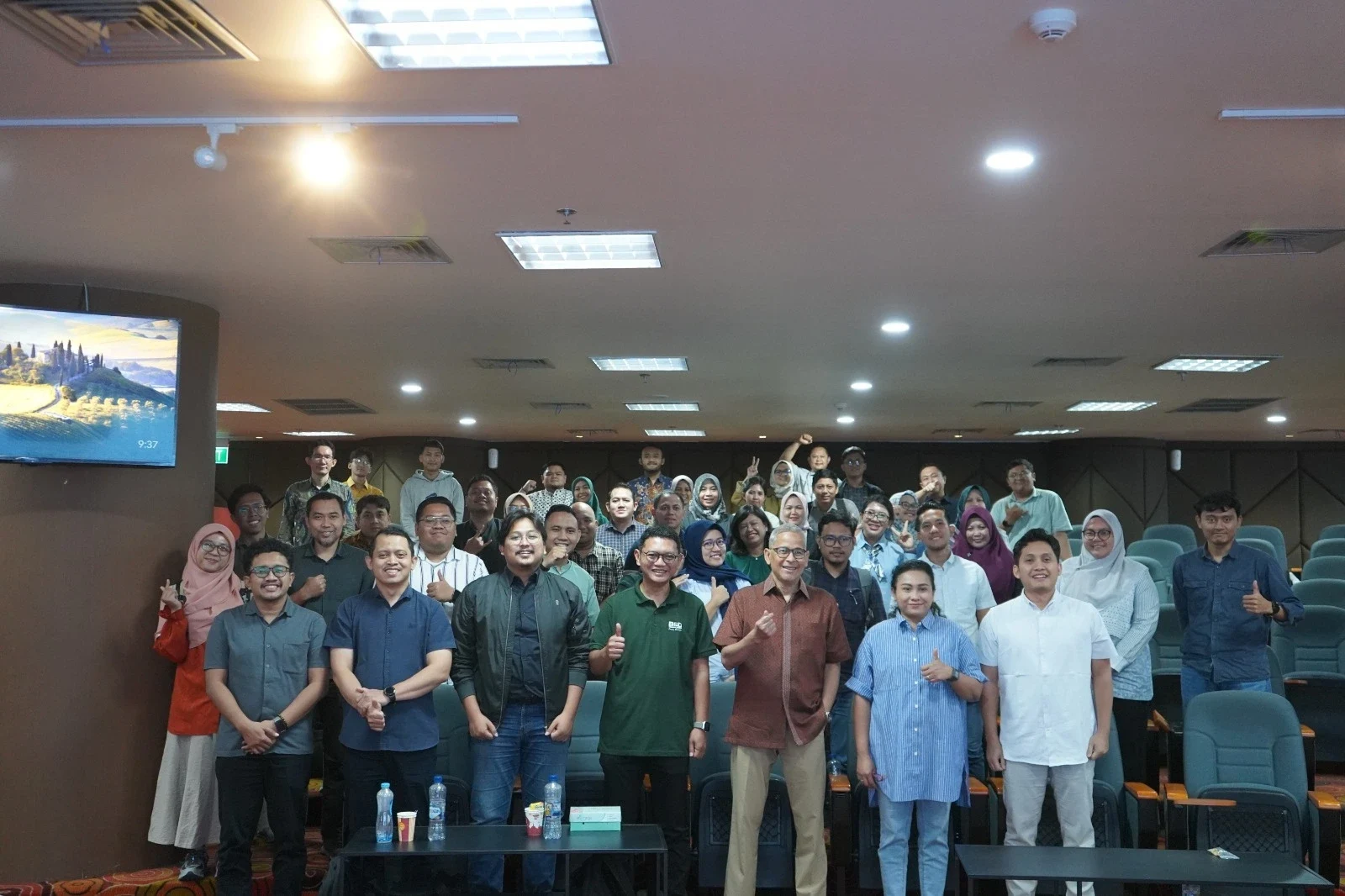
UNAIR NEWS – The Airlangga Executive Education Center (AEEC) at Universitas Airlangga (UNAIR) held a Statement of Financial Accounting Standards 118 (PSAK 118) training program titled “Unpacking Implementation, Impact, and Financial Statement Presentation Under the Latest Standard” on Wednesday and Thursday (September 16-17, 2026). A total of 60 participants attended the in-person sessions at ASEEC Tower, Dharmawangsa-B Campus, UNAIR. The training covered the implementation of PSAK 118 on the presentation and disclosure of financial statements.
PSAK 118 changes how companies present financial performance, particularly in the income statement. The standard takes effect on January 1, 2027. Its implementation involves account classification, the preparation of notes to the financial statements, and adjustments to reporting systems.
The training featured Dr Devi Sulistyo Kalanjati SE Ak MAcc MAAC CPA CA, a senior lecturer, member of the Financial Accounting Standards Board (DSAK) of the Indonesian Institute of Accountants (IAI), consultant, and researcher. Also attending was Dudi M Kurniawan Ak MBA CA FCPA (Aust), an audit committee member and member of Public Accountant Professional Standards Board II of the Indonesian Institute of Public Accountants (IAPI).
Changes in presentation and information detail
Dr Kalanjati explained the purpose of the new standard. “PSAK 118 is a new accounting standard that aims to improve how companies communicate financial performance in their financial statements,” she said.
The standard requires companies to classify income and expenses into operating, investing, and financing categories. The income statement contains two new subtotals: operating profit, and profit before financing and tax.
Companies also disclose Management-defined Performance Measures (UKTM) in a single note to the financial statements. Most implementation costs relate to changes in internal processes and systems. “The benefits of implementing PSAK 118 outweigh its estimated costs,” she said.
Aggregation and disaggregation
Meanwhile, Kurniawan highlighted the level of information detail. Companies combine similar items and separate dissimilar ones. “Aggregating and disaggregating items in financial statements must not obscure material information that users of financial statements should know,” he emphasized.
He gave the example of separating receivables from third parties and related parties because their credit risks differ. Cash and cash equivalents, by contrast, are combined because they share the same liquidity characteristics. “Generic labels such as ‘other’ are only permitted for items that are individually immaterial,” he said.
The training aims to help participants understand the concepts, principles, key changes, and practical implications of implementing PSAK 118. The program also includes a case study on the impact of PSAK 118 on financial statement formats, as well as a workshop on preparing an implementation checklist and action plan.
To support these preparation needs, AEEC Universitas Airlangga will hold the PSAK 118 training again in November. Schedule and registration information is available on the official AEEC website.
Author: Naswa Thalita Zada
Editor: Yulia Rohmawati