

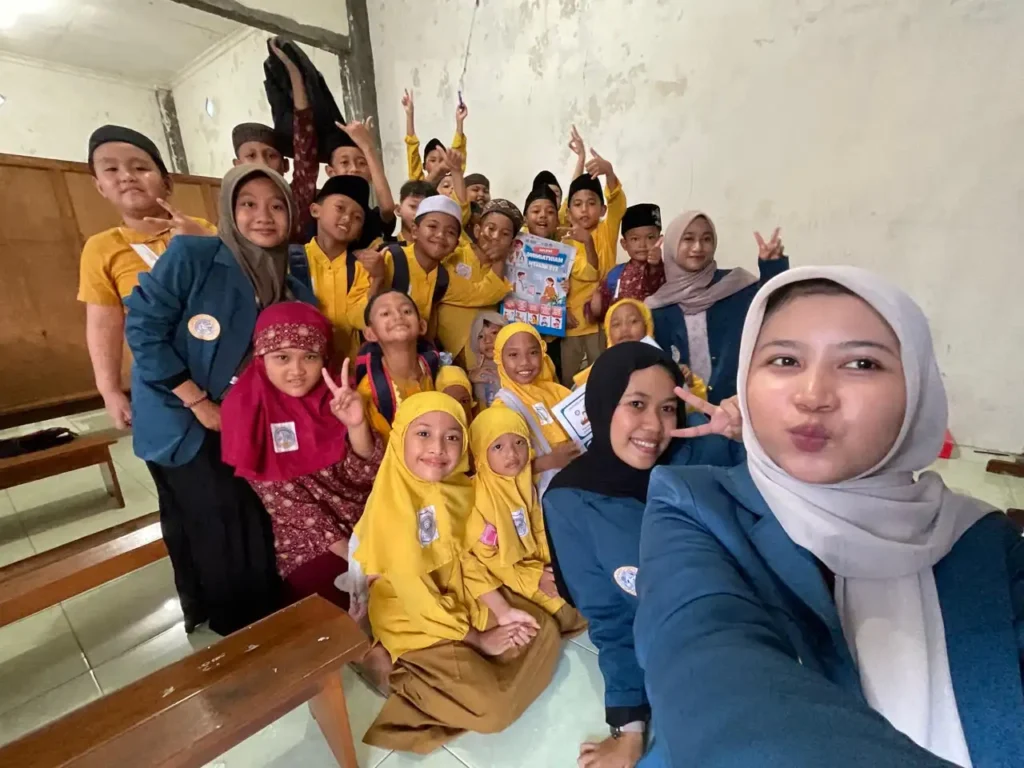
UNAIR NEWS — Nursing students from Universitas Airlangga (UNAIR) organized a community eye health education program for children at Graha Bunder Asri Mosque in Gresik on April 16, aiming to raise awareness about healthy vision habits at an early age. The initiative was led by five students in UNAIR’s Diploma III Nursing Program, Putryana Waluika, Salsabilah Lutfiah, Gadis Rahayu Pratiwi, Novia Dwi Aryanti and Qismah Nuroniah, as part of their community nursing practicum.
The educational session focused on three main topics: the anatomy of the human eye, how vision works and practical ways children can protect their eyesight. Students explained the functions of the cornea, lens, retina and optic nerve, described how the brain processes visual information, and discussed common vision problems such as nearsightedness and farsightedness.
Participants also learned healthy daily habits that support eye health, including limiting recreational screen time, reading in adequate lighting, eating foods rich in vitamin A and receiving routine eye examinations.
“We wanted children to understand that their eyes are precious and that small daily habits can make a big difference in the long run,” said Putryana Waluika, one of the student organizers. “When children understand why something matters, they are more likely to remember it and put it into practice.”
Although the presentation was delivered primarily in English to help students develop international health communication skills, organizers also explained key concepts in Indonesian using child-friendly language to ensure participants understood the material. The mosque was selected because it serves as a gathering place for families in the Graha Bunder Asri neighborhood, allowing organizers to reach children and parents in a familiar community setting.
To keep children engaged, the students incorporated question-and-answer sessions, demonstrations and quizzes throughout the program. Organizers said the interactive approach helped simplify scientific concepts while encouraging active participation. Parents who attended the event said the session highlighted the importance of eye care in an era when children spend increasing amounts of time using digital devices.
“My child spends a lot of time on his tablet, and I didn’t realize how much that could affect his developing eyes,” one parent said. ” This program opened our eyes too, not just the children’s. I hope events like this continue to be held regularly in our neighborhood.”
The outreach was part of the nursing program’s community service component, which gives students experience applying health education in real-world settings while working directly with local residents. Health professionals have increasingly emphasized preventive eye care for children as screen use becomes more common. Community education programs such as this aim to encourage healthy habits early and increase awareness among both children and their caregivers.
Authors: Putryana Waluika, Salsabilah Lutfiah, Gadis Rahayu Pratiwi, Novia Dwi Aryanti, Qismah Nuroniah
Editor: Andi Pramono